Tall vs. Big: The Definitive Guide to Understanding the Difference in Cuts and Finding Your Perfect Fit
Shopping online for clothes as a larger man is often a game of Russian Roulette.
You see a shirt you like. You select “3XL” from the drop-down menu. You wait a week for it to arrive. And when you finally put it on, one of two things happens:
-
It fits your chest perfectly, but the moment you raise your arms, it turns into a crop top.
-
It is long enough, but the sleeves are comically huge and the body billows like a camping tent.
Why does this happen? Why is it so hard to get a consistent fit?
The answer lies in the confusing, often misleading terminology of the fashion industry. You see categories like “Plus Size,” “Extended Sizes,” “Big and Tall,” and “Oversized.” It is easy to get lost in the jargon.
But the most critical distinction you need to understand to upgrade your wardrobe is the difference between “Big” and “Tall.”
These are not just marketing buzzwords. They are two completely different engineering concepts that address two different anatomical needs. And here is the kicker: most mass-market brands get them both wrong.
Here is the no-bullshit guide to understanding the geometry of your clothes, and why Mini Gigante takes a different approach.
Part 1: What Does “Big” Actually Mean?
When you see “Big” sizing (often denoted as 1XB, 2XB, etc., or just standard 2XL, 3XL in regular brands), the focus is primarily on Girth.
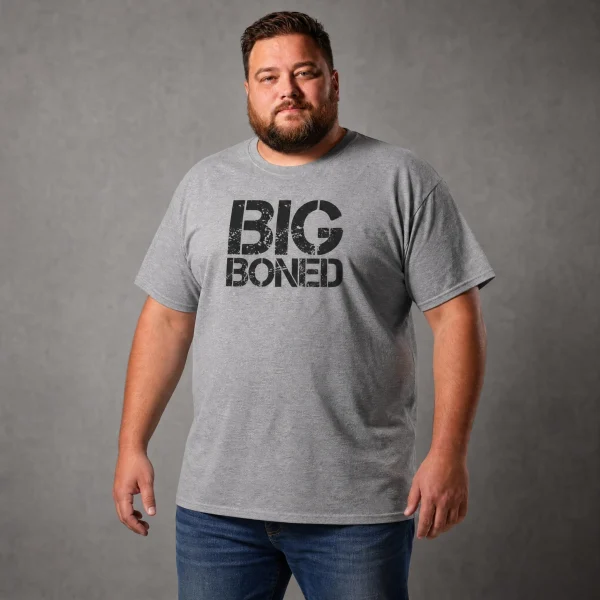
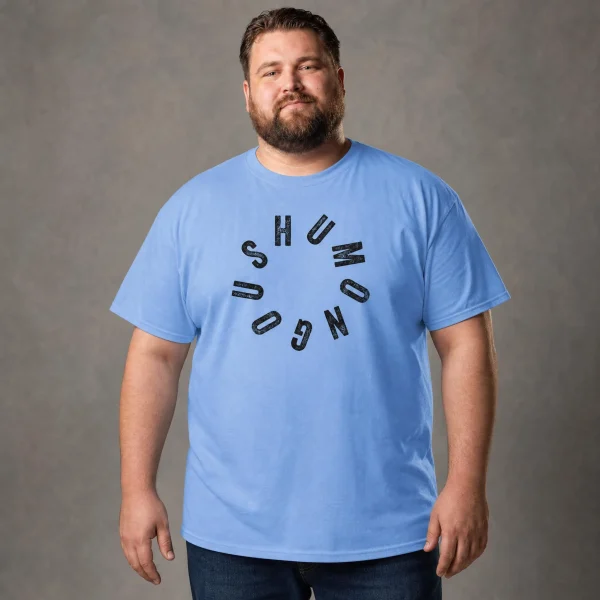
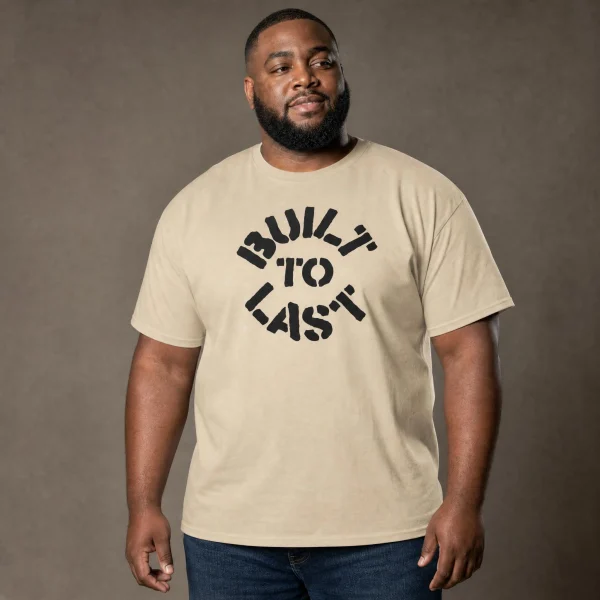
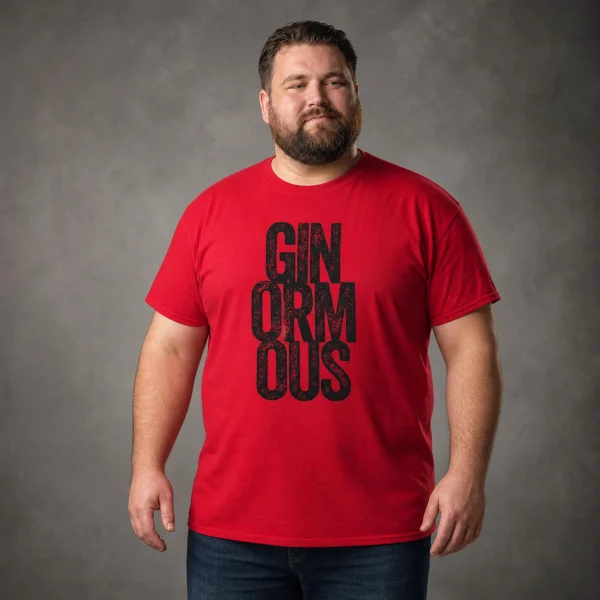
“Big” sizing is designed for men who need more room in the body. It accounts for a wider circumference around the chest, the shoulders, and most importantly, the midsection.
The Industry Failure: The problem with standard mall brands is that they design a “Large” shirt for a model with a 32-inch waist. When they scale that shirt up to a 3XL, they often just zoom in on the pattern uniformly. They make the shoulders wider, sure. But they often fail to account for the geometry of a belly. A standard 3XL might fit your shoulders, but it tapers in slightly at the waist (because the original “Large” pattern did). The result? A shirt that clings to your stomach while drowning your arms in excess fabric.
The Right Way to Do “Big”: A true “Big” cut needs to account for the “Boxy” silhouette. It needs to fall straight down from the armpit to the hem, without tapering. It gives you the width where you actually need it (the torso) without turning you into a shapeless blob.
Part 2: What Does “Tall” Actually Mean?
On the other side of the spectrum, we have “Tall” sizing (often denoted as LT, XLT, 2XLT). The focus here is strictly on Vertical Length.
This sizing is originally designed for the “lanky” build – guys who are 6’3″ and above, but might be relatively thin.
The Pain Point: The biggest issue tall guys face is the “Ride Up.” You might buy a standard XXL because you need the length. But because standard sizing increases width as it increases length, you end up with a shirt that is wide enough for two people, just to get the hemline to reach your belt. Conversely, if you buy a size that fits your width, it is too short. You spend your whole day tugging your shirt down every time you reach for a door handle or a steering wheel.
The Right Way to Do “Tall”: A proper “Tall” adjustment adds length to two critical areas:
-
The Torso: Extending the hemline so it sits well below the belt.
-
The Rise: Adjusting the armhole depth so that lifting your arms doesn’t pull the entire shirt up with them.
Part 3: The Trap of “Big OR Tall”
Here is where the industry fails 90% of our customers. Most brands treat these categories as mutually exclusive.
-
You can buy from the “Big” section (Wide but short).
-
You can buy from the “Tall” section (Long but narrow).
But what if you are both?
What if you are a guy who is 6’1″ or 6’2″ (Tallish), has broad shoulders (Big), and carries some weight in the midsection?
-
The “Big” shirt exposes your belly when you move.
-
The “Tall” shirt is too tight across the chest and stomach.
You are stuck in the middle, forced to choose between looking like you are wearing a dress or looking like you shrunk your clothes in the dryer.
Part 4: The Mini Gigante Solution (The Hybrid Fit)
We don’t believe you should have to choose between width and length.
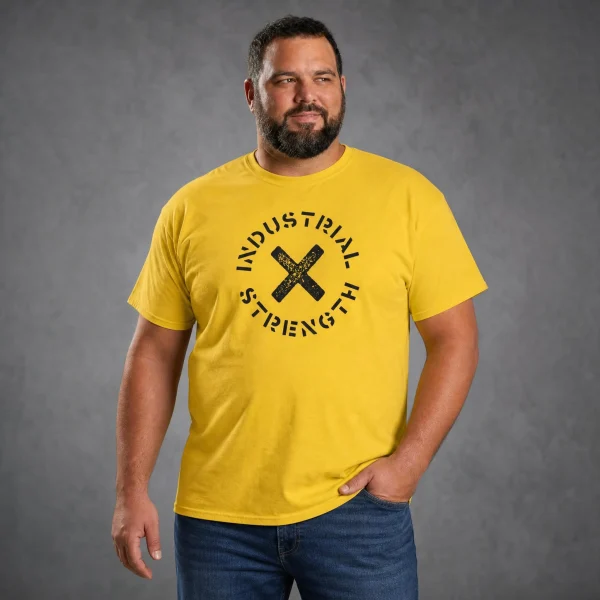
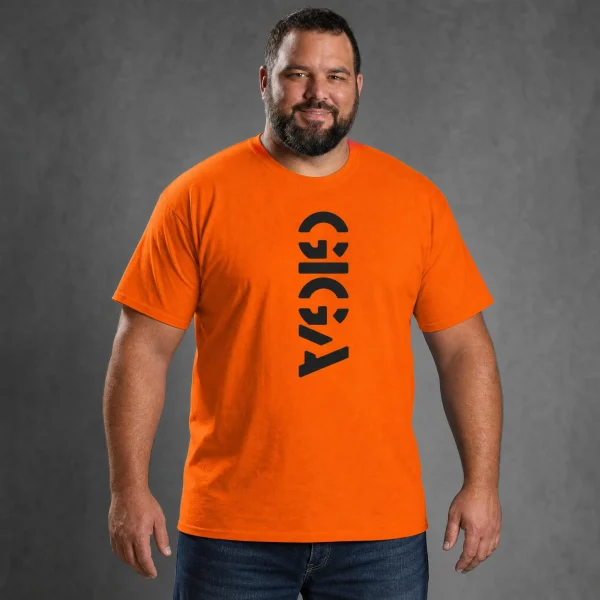
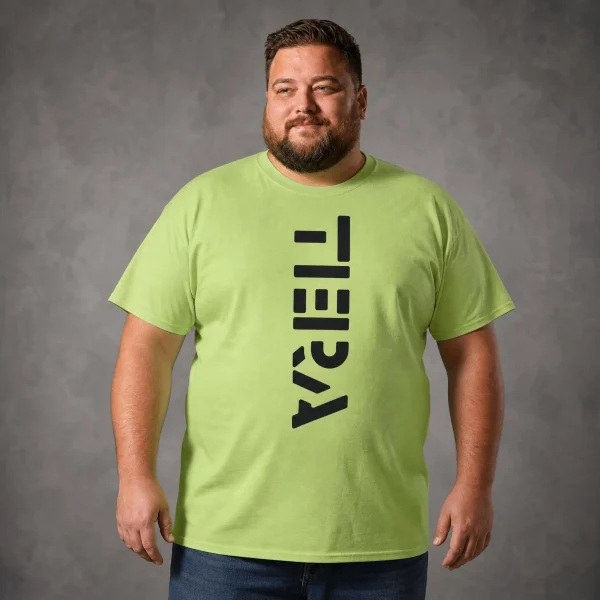
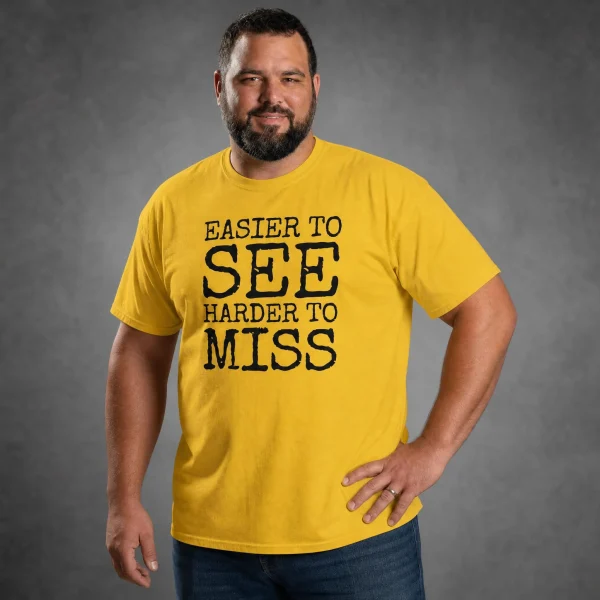
When we curated the fit for Mini Gigante, we looked for a “Hybrid” solution. We know that a large guy needs the chest room of a “Big” cut, but he also needs the coverage of a “Tall” cut to account for the belly.
The “Belly Theft” Concept: Here is a bit of physics: If you have a larger belly, it acts like a fulcrum. It pushes the fabric out. This consumes the fabric’s length. A shirt that is 30 inches long on a flat stomach might effectively be only 28 inches long on a round stomach because the fabric has to travel over the curve.
Our Approach: This is why we exclusively use the Gildan 5000 and similar heavy-duty cuts.
-
Relaxed Girth: It creates that boxy, “Big” silhouette that gives you room to breathe and doesn’t cling.
-
Generous Length: It is naturally cut longer than fashionable “retail” brands. It provides that “Tall” coverage without needing a special “XLT” tag.
We don’t just take a Small pattern and zoom in. We engineer our fits (through our choice of blanks) for larger bodies from the ground up.
Part 5: How to Measure Yourself (Stop Guessing)
To finally solve this puzzle for your own wardrobe, stop looking at “S/M/L” labels. They are meaningless. Start looking at inches.
Grab your favorite shirt – the one that actually fits you well – lay it flat on a table, and measure these two lines:
1. The “Big” Measure (Width): Measure from armpit seam to armpit seam.
-
If this number is too small on a new shirt, it will cling.
2. The “Tall” Measure (Length): Measure from the highest point of the shoulder (next to the collar) all the way down to the bottom hem.
-
If this number is short, you are in “crop top” territory.
Compare these two numbers to our size chart. You will likely find that our cuts offer that extra inch or two in both directions that you have been missing.
The Bottom Line
You are not “shaped wrong.” The clothes you have been buying were just “designed wrong.”
Understanding the difference between Big (girth) and Tall (length) is the first step. Recognizing that you probably need a mix of both is the second. Finding a brand that caters to that mix? That is the final step.
Stop settling for shirts that only fit half of your body. Upgrade to a cut that understands the whole picture.