RIP Bacon Neck: Why Your Collars Sag (And Why the 7/8″ Stitch Matters)
You know exactly what I am talking about.
You pull a t-shirt out of the dryer. It might be your favorite shirt. Maybe it has a killer graphic on it, or the color is perfect. You put it on, look in the mirror, and there it is.
The collar.
It’s not sitting flat against your neck anymore. It is wavy. It is rippled. It is drooping down like a sad, stretched-out rubber band.
This phenomenon is known as “Bacon Neck.”
And for a big and tall guy, Bacon Neck isn’t just a minor annoyance – it is a style killer. You could be wearing a $300 pair of sneakers and a fresh haircut, but if your collar looks like a piece of wavy breakfast meat, the entire outfit looks sloppy.
At [Brand Name], we are obsessed with the details that most brands ignore. We know that for guys with a larger build, the fit around the neck is just as important as the fit around the waist.
Here is the deep dive into why collars fail, why it matters for your face shape, and why we stick to the Gildan 5000 standard to solve it.
The Anatomy of a Fail: Why Do Collars Sag?
To fix the problem, you have to understand the physics of it. Why does a collar turn into bacon?
It usually comes down to three factors:
1. Cheap Construction (The “Self-Fabric” Trap)
Many fast-fashion brands try to save money by making the collar out of the exact same material as the rest of the shirt (this is called “self-fabric”). The problem? The fabric on your chest is designed to hang, not to stretch and snap back. A proper collar needs to be made of Ribbing – a specific type of knit that has elasticity and memory. If the brand cheaped out on the ribbing, that collar is dead on arrival.
2. The Elastane Breakdown
Some brands mix spandex or elastane into the collar to make it stretchy. That feels nice when you first buy it. But elastane is heat-sensitive. Every time you blast that shirt in a hot dryer, the tiny elastic fibers break down. Once they snap, the structure is gone, and you are left with the waves.
3. Gravity and Hangers
This is user error (we will get to this later). If you hang a heavy wet shirt on a wire hanger by shoving the hanger through the neck hole, you are actively stretching the fabric while it is wet and vulnerable. You are literally training the shirt to be loose.
The “Frame Theory”: Why This Matters for Big Guys
You might be thinking, “It’s just a collar, who cares?”
You should care. Because the collar is the frame for your face.
For big and tall men, proportion is everything. If you have broad shoulders, a thick neck, or a fuller face, a loose, scooped, or sagging collar throws off your visual balance. It makes your neck look shorter and your shoulders look sloppier. It creates a vibe of “I gave up.”
On the flip side, a High and Tight collar does three things:
-
It defines the jawline: It creates a crisp line that separates your neck from your chest.
-
It builds structure: It signals that the garment is high quality and well-maintained.
-
It broadens the shoulders: A tight neck draws the eye inward and up, making the horizontal line of your shoulders look even more powerful.
The Solution: The 7/8″ Double-Needle Standard
We don’t just pick random t-shirts to print on. We test them.
When we chose the Gildan 5000 as our canvas, the collar was a massive deciding factor. It is engineered differently than the flimsy fashion tees you find at the mall.
Here are the specs that matter:
1. The 7/8″ Thickness
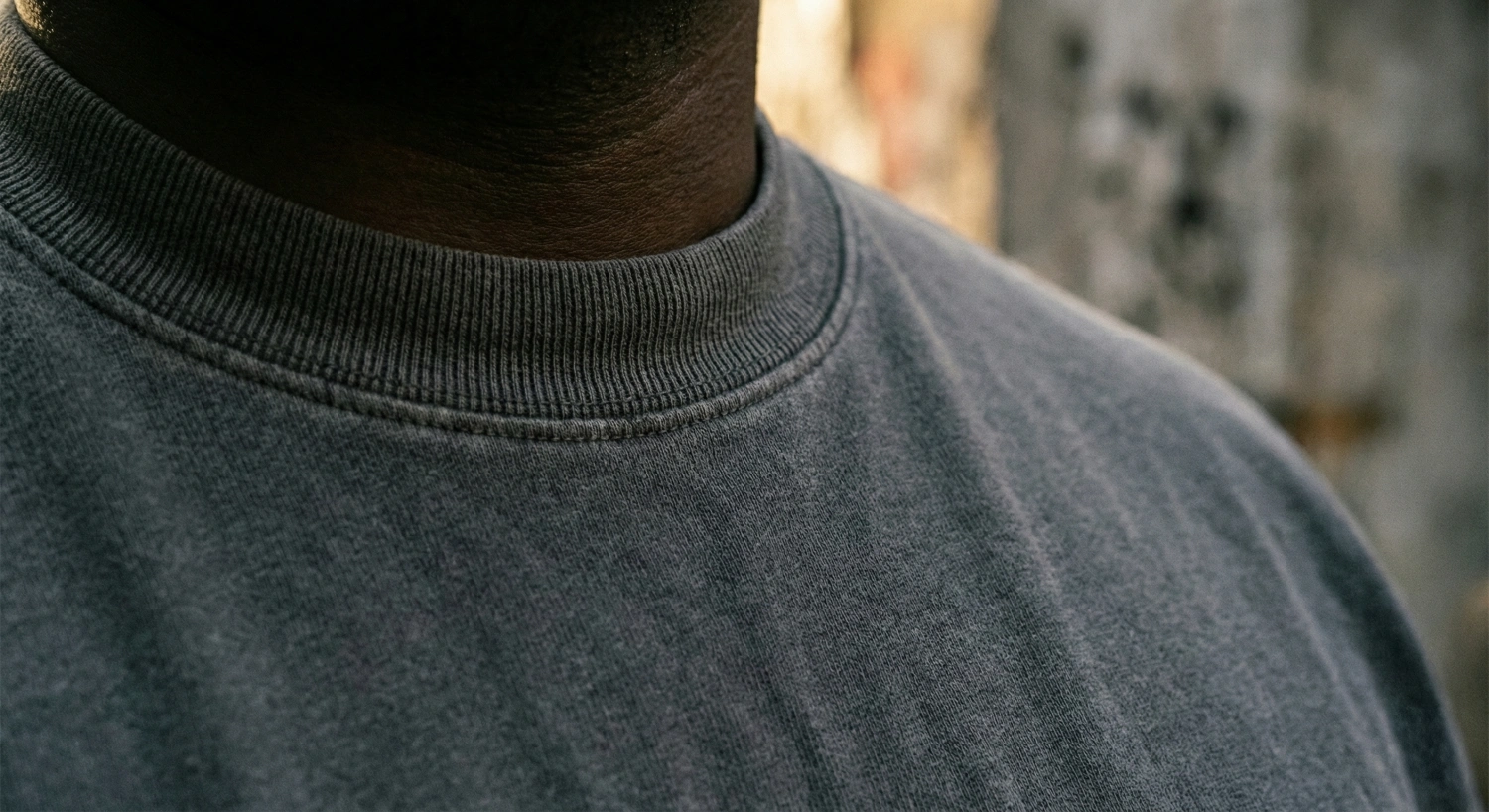
Most fashion tees have a thin, 1/2-inch collar. It looks delicate. The Gildan 5000 rocks a 7/8″ collar. That is nearly an inch of solid ribbing. It is thick, substantial, and masculine. It has the structural strength to stand up and stay flat against the clavicle, rather than flopping over.
2. Seamless Rib Tech
The collar is seamless. This means it is knit as a tube (or joined invisibly) rather than having a bulky seam that rubs against your neck. This reduces friction. Less friction means less tugging, and less tugging means less stretching over time.
3. Double-Needle Stitching
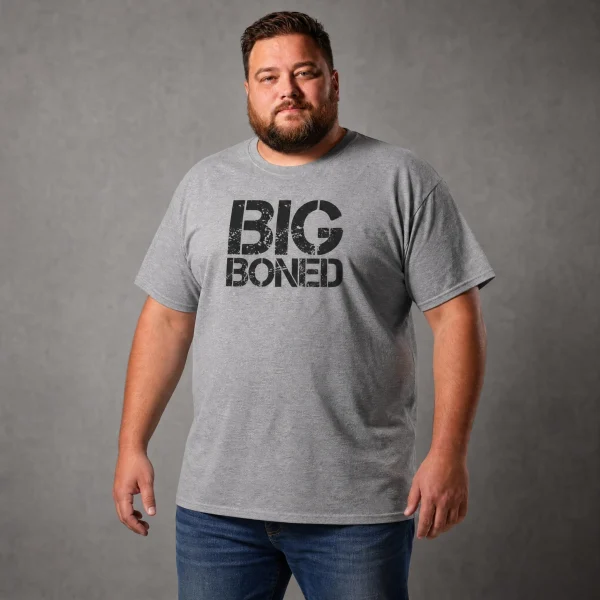
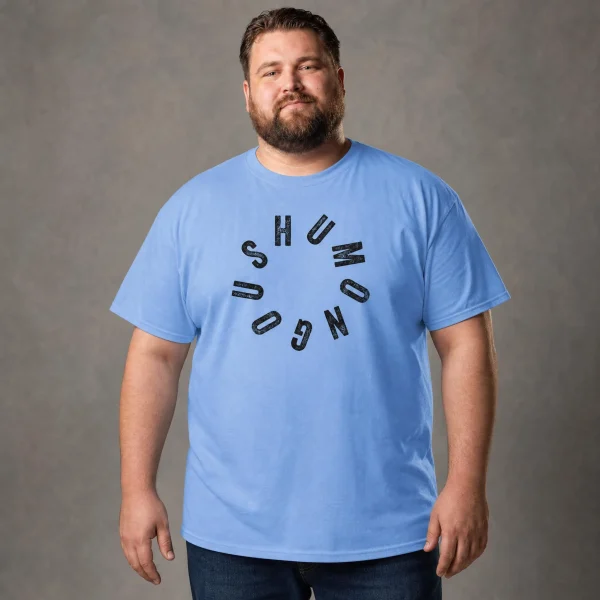
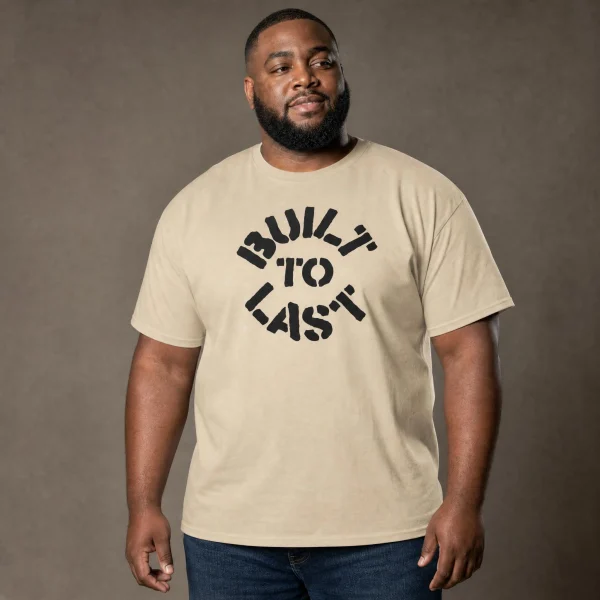
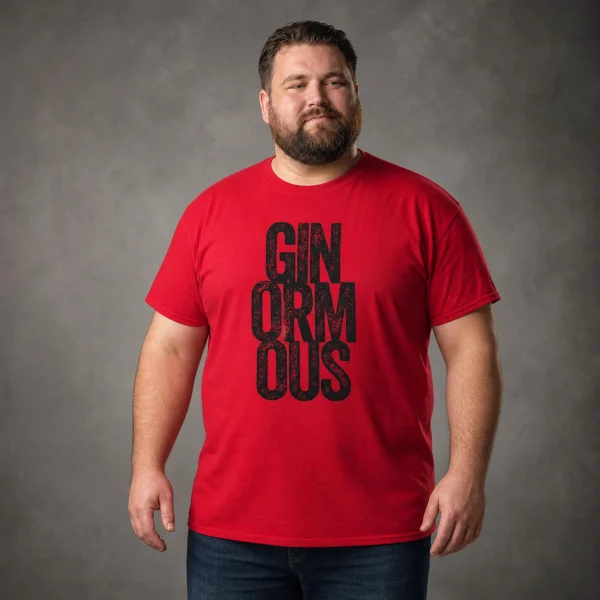
Look closely at the stitching around the neck of our shirts. You will see two parallel lines of stitching. This is “Double-Needle” reinforcement. It locks the ribbing to the body of the shirt with double the strength of a single stitch. It prevents the neckline from unraveling or separating after a few intense wash cycles.
How to Keep Your Collar Crisp (Maintenance Guide)
We provide the hardware (the heavy cotton shirt), but you have to provide the software (the care routine).
Even the toughest collar can be ruined if you treat it wrong. Here is how to keep that “Fresh out of the box” look for years:
-
The “Hanger Dive” is Illegal: Never, ever insert a hanger through the neck hole. Always insert the hanger from the bottom (the hem) up. Stretching the neck to force a hanger in is the #1 cause of Bacon Neck.
-
Wash Cold, Dry Low: We said it in the last post, and we will say it again. Heat destroys fibers. Wash cold. If you can, air dry. If you must use a dryer, use the lowest heat setting.
-
The Rescue Method: Did you accidentally stretch a collar? There is a fix.
-
Dampen the collar with water.
-
Lay the shirt flat on a table.
-
Gently push the ribbing inward to “condense” it back to its original size.
-
Hit it with an iron (on the cotton setting) while it is damp to “set” the shape back in place.
-
The Bottom Line
A t-shirt is only as good as its weakest point. You can have the best graphic design in the world, but if the collar looks like a rollercoaster, the shirt belongs in the rag pile.
Stop settling for shirts that look tired after two weeks. Upgrade to a build that respects the details.