The “Oversized” Trend Myth: Why Sizing Up in Regular Brands Does Not Work for Big Men
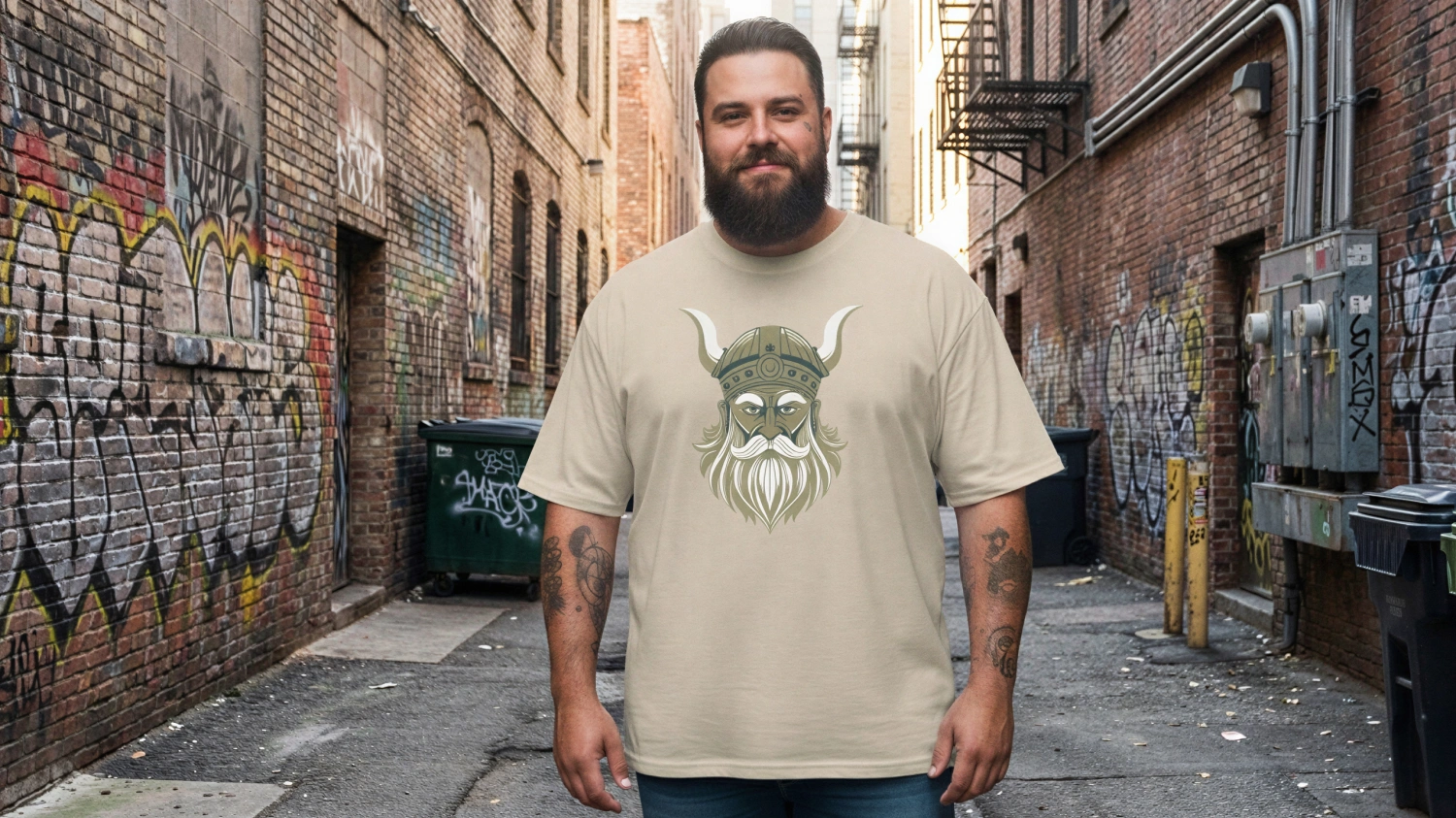
Scroll through Instagram or TikTok and you will see the “oversized” aesthetic everywhere. Skinny dudes rocking gigantic hoodies and baggy tees that swallow them whole. It looks effortless. It looks cool. It looks like modern streetwear.
Naturally, a lot of big guys see that and think, “Easy. I can do that.”
So you try the obvious move. If you normally wear a 2XL, you buy a 4XL. You assume more fabric equals more style. You expect that relaxed, draped, oversized streetwear look.
It almost never works.
And it is not because big men cannot wear oversized. Big men can absolutely wear oversized. The issue is that there is a massive difference between something designed to look oversized and something that is simply the wrong size.
Oversized is a cut. Not a number on a tag.
Oversized vs Too Big: The Difference Most Guys Miss
When a shirt is designed to be oversized, the brand is controlling the proportions. The width, the length, the neckline, the shoulder drop, and the sleeve shape are all built intentionally.
When you size up in a regular brand, none of that is controlled.
You are not getting an oversized silhouette. You are getting a distorted silhouette.
That is why the “just buy bigger” strategy fails so hard for big men. Instead of looking relaxed and styled, you end up looking messy and accidental.
And that messy look hits big men harder because the eye already reads a larger body as “more fabric.” If the proportions are wrong, the outfit becomes a blob fast.
What Actually Happens When Regular Brands Make 4XL
Here is the part nobody wants to admit.
A lot of standard brands do not truly design big sizes. They scale them.
They take the Medium pattern and blow it up like a balloon.
That sounds fine until you see what that scaling does.
Problem 1: The neck hole gets ridiculous
When a shirt is scaled up uniformly, the neckline becomes wide and loose. It sits low, stretches out, and can even slide off the shoulder.
That is not oversized. That is sloppy.
A good neckline is one of the main things that makes a big man look sharp. When the neck collapses, the whole outfit looks cheap.
Problem 2: Sleeves get longer, not better
Oversized sleeves should be wider and slightly longer, but still controlled.
Scaled-up sleeves become long in a weird way. They hang past where they should. They make your arms look shorter. They feel like you are wearing a borrowed shirt.
Again, not a vibe.
Problem 3: The body gets wide but the length stays wrong
This one is the biggest betrayal.
A lot of scaled-up tees get wider but not longer in the right places. Or they get longer in the wrong places. The result is a shirt that is huge around the stomach but still rides up. Or a shirt that hangs low in the back but sits awkwardly in the front.
It is the worst of both worlds.
Big men need added length to balance width. Without it, the silhouette looks off immediately.
Problem 4: The shoulders collapse
Oversized looks good when the shoulder drop is intentional. But scaling up creates droopy shoulders that make your upper body look rounded and unstructured.
Instead of looking relaxed, you look like you are melting into the shirt.
That is the “giant pajama top” problem.
Why “Oversized” Works on Skinny Guys in the First Place
This is important context.
On a small frame, a huge hoodie creates contrast. That contrast is the style. The person looks smaller and the clothes look bigger, which creates the oversized aesthetic.
On a big frame, there is already visual mass. So oversized only works when it is engineered to look intentional. Otherwise, it does not create contrast, it creates chaos.
Big men do not need more fabric. They need better proportions.
What True Oversized Streetwear Looks Like on Big Men
Here is what you actually want when you say you want oversized.
You want width in the chest and body for that relaxed vibe, but you still need a neck that fits properly so you do not look sloppy. You need sleeves that are wider but not ridiculously long. You need added length in the body to balance the width.
In other words, you want the oversized feel without losing structure.
A properly designed big cut usually includes:
-
A structured neckline that sits flat and holds shape
-
More room in the chest and midsection without cling
-
Sleeves that are wider for comfort but stop at the right point
-
Added body length so the shirt does not ride up
-
Shoulder placement that looks intentional, not collapsed
-
Fabric weight that helps the shirt hang, not drape
This is what separates streetwear from sleepwear.
How to Tell If a Shirt Is “Designed Big” or Just “Sized Big”
If you want to avoid wasting money on failed oversized attempts, check these things quickly before you buy.
Check the neckline
Does it look structured? Does it sit cleanly and flat? If it looks loose on the hanger, it will look worse on your body.
Check the sleeve shape
You want wider sleeves, not just longer sleeves. If the sleeve looks like a tube that goes forever, it is probably just scaled.
Check the length
A big tee should have enough length to cover your beltline even when you move. If it is wide but short, walk away.
Check the fabric
Thin fabric makes oversized look cheap. Heavy cotton makes it look intentional because it hangs and holds shape.
Check the overall silhouette
Does it look like a clean shape, or like a stretched version of a smaller shirt? Trust your eye. If it looks odd on the hanger, it will not suddenly look perfect on you.
The Confidence Trap of Sizing Up
A lot of big men size up because they think it will hide them.
But the irony is that the wrong oversized makes you more noticeable, not less.
When your neckline is falling off, when your sleeves look cartoonish, when your shirt is wide but rides up, people notice. Not because you are big, but because your clothes look wrong.
That is why sizing up usually does not make you feel more confident. It makes you feel like you are wearing something you should not be wearing.
And once you feel that, you start tugging and adjusting again. The exact thing you were trying to avoid.
The Bottom Line
Do not fall for the myth that buying a 4XL in a mall brand will give you a styled oversized streetwear look. Most of the time it will not. It will just make you look messy.
True oversized aesthetics require intentional engineering and proper proportions, especially for big bodies.
Look for brands that design their big cuts specifically for big men, so you get the relaxed, comfortable vibe without sacrificing structure.
Oversized is a design choice. Not a sizing trick.
How to pick your size
Do not buy a 4XL in a regular brand and hope it looks like streetwear. Measure a shirt that already fits you. Then match MiniGigante numbers. A is length, shoulder to hem. B is chest width, armpit to armpit.
| Size | Length (A) | Chest width (B) |
|---|---|---|
| XL | 31 in | 24 in |
| 2XL | 32 in | 26 in |
| 3XL | 33 in | 28 in |
| 4XL | 33.9 in | 29.9 in |
| 5XL | 35 in | 31.9 in |
Hoodies, cm, and a longer walkthrough live on the size chart.
Quick questions
Should I just size up?
No. A scaled-up slim tee keeps slim shoulders and weird sleeves. You get more fabric, not a better cut. Match the table instead of the tag you wear at the mall.
What does MiniGigante actually sell?
Original 5XL graphic tees and hoodies, XL to 5XL. Tees on Gildan 5000. Hoodies on Gildan 18500. Boxy fit. That is it. No jeans, no shoes, no suits.
Can I send it back?
Yes. We offer free worldwide shipping, and you can return it within 30 days. Shipping & Returns has the details.
Want the relaxed look without the pajama look?
Start with a cut that was drawn for a big body. Uriya is a designer who wears these sizes himself. That is the whole My Story in one line.
Every design is original. The shirt should feel good, look good on you, and be fun to wear. Shop 5XL graphic tees, or funny t-shirts for big guys. Check the size chart first if you want numbers.